
What Would Dolly Do?
What Would Dolly Do?
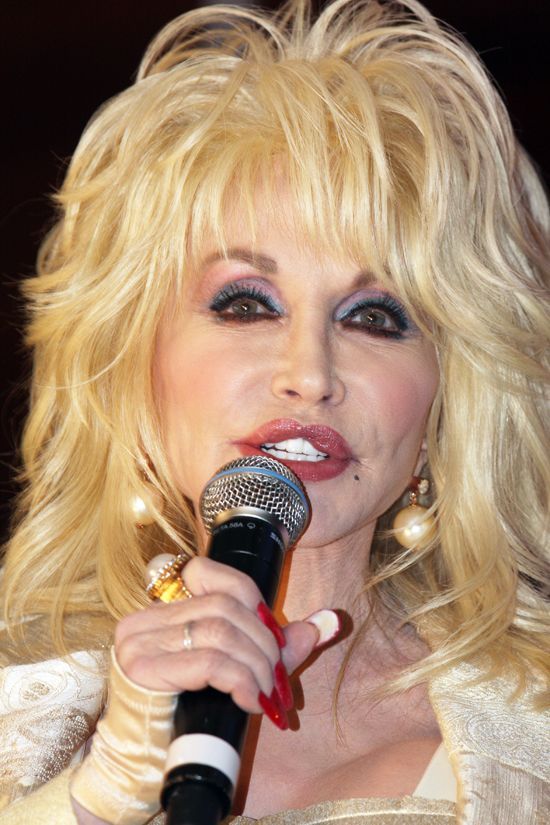
The death of Dolly Parton on August 25 unleashed a torrent of tributes from
across the cultural and religious spectrum, confirming her status as one of the
nation’s few non-polarizing figures. She was celebrated not only for her
music but for her kindness, philanthropy, and positivity.
As the granddaughter of a Pentecostal preacher, Parton was steeped in the
Bible. She learned to sing in church, and topics of faith were naturally
threaded into her lyrics, which as one commentator said, touched on hope,
home, happiness, and “the exasperating nature of all men excepting Jesus.”
Yet, as an adult she was never part of a congregation and she generally steered
clear of religious and moral debates. When pressed about her affirmation of
gays and lesbians—not a given in the conservative-leaning Christian world of
country music—she replied: “I keep saying, ‘Well, if you’re the fine Christian
you think you are, why are you judging people? That’s God’s job. We’re not
God. We’re not judges. We’re supposed to love one another. We’re supposed
to not judge and we’re not supposed to take vengeance on other people.”
“We’re supposed to love one another.” Parton boils the Christian way of life
down to a few words. That much she took from her Pentecostal upbringing,
and in the way she lived out those words, they were hardly trivial.
I had never thought to put Dolly Parton and the apostle Paul in the same
sentence, but in this week’s reading we find Paul also boiling down the
Christian way of life to love. All the commandments, he says, “are summed
up in this word, ‘You shall love your neighbor as yourself’” (Romans 13:9).
By “love” Paul (and Parton too) is not referring merely to a warm feeling but
to concrete action—treating others with a generosity and grace that reflects
the generosity and grace of God in Jesus Christ.
Proclaiming the “law of love” is not necessarily the end of the discussion, in
the Bible or in our everyday life. Sometimes we puzzle over the form that
love should take in a particular situation. We may wonder if it is possible to
love without ever judging. That struggle would make a good Dolly Parton
song.
Still, love is the starting place, Paul says, and we know, as Parton did, that
whatever love entails, it (as Paul says elsewhere) “is patient; love is kind;
love is not envious or boastful or arrogant . . .” (1 Corinthians 13:4).
See you in church,
Pastor David
Verse Quote here